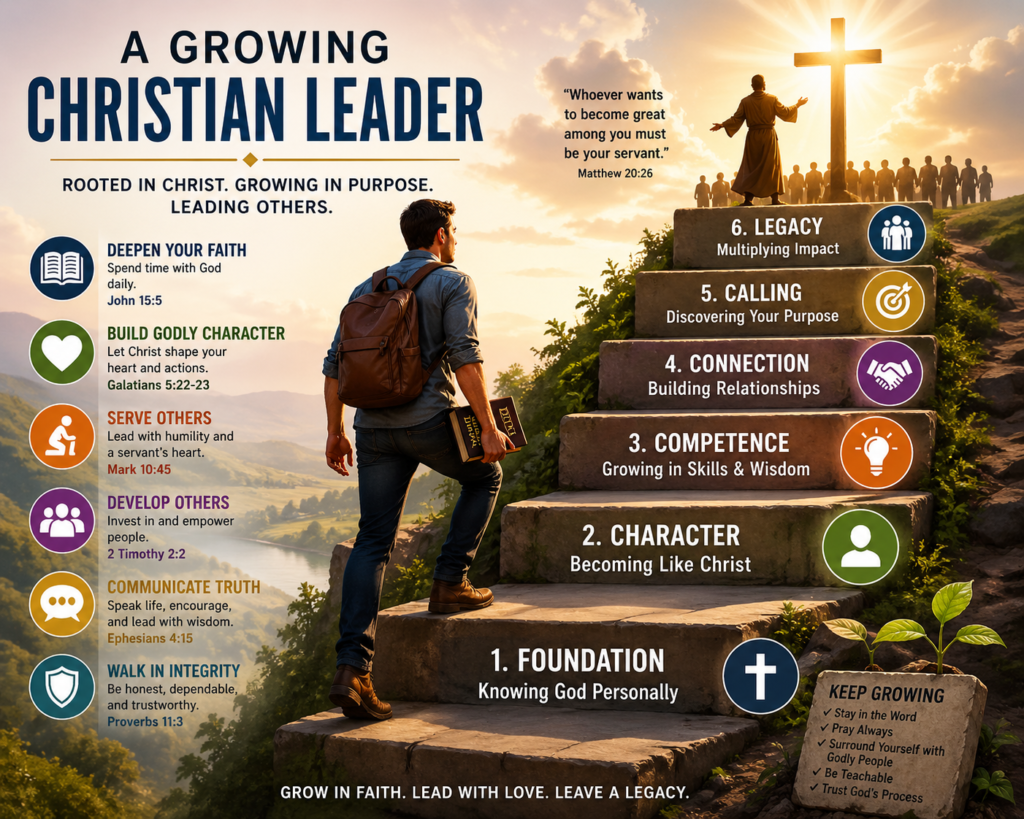

Leadership in the church, workplace, home, or community is both a privilege and a responsibility. If you’ve been asking, how can I grow as a Christian leader, you are already taking an important first step: recognizing that growth matters.
Christian leadership is not about titles, popularity, or power. It is about serving others, honoring God, and becoming the kind of person people trust and willingly follow. Great Christian leaders continue growing spiritually, emotionally, and practically.
Whether you lead a ministry, mentor others, guide your family, or influence people in daily life, this guide will help you become stronger, wiser, and more effective.
What Does It Mean to Be a Christian Leader?
A Christian leader is someone who influences others through biblical values, Christlike character, and servant-hearted action. Leadership can happen in many places:
- Church ministries
- Business environments
- Families
- Schools
- Community groups
- Friend circles
Christian leadership is less about position and more about responsibility.
Jesus Christ modeled leadership through humility, compassion, truth, and sacrifice. He taught that true greatness comes through serving others.
1. Deepen Your Relationship with God
If you want to grow as a Christian leader, your first priority must be spiritual growth.
Leadership without intimacy with God becomes exhausting and empty. Your influence should flow from your walk with Him.
Practical Ways to Grow Spiritually:
- Spend daily time in prayer
- Read Scripture consistently
- Worship regularly
- Practice gratitude
- Listen for God’s direction
- Keep a journal of lessons and prayers
The stronger your roots, the stronger your leadership.
2. Develop Christlike Character
Talent may open doors, but character keeps them open.
Many leaders fail not because they lacked skill, but because they lacked integrity. Christian leadership requires inner transformation.
Character Traits to Build:
- Honesty
- Humility
- Patience
- Faithfulness
- Self-control
- Compassion
- Courage
Ask yourself regularly:
- Do people trust me?
- Am I the same person in private and public?
- Do I respond with grace under pressure?
Growth begins inside before it shows outside.
3. Become a Servant Leader
The world often teaches leaders to dominate. Christianity teaches leaders to serve.
Servant leadership means asking:
- How can I help others succeed?
- How can I lighten burdens?
- How can I encourage growth in people around me?
When people know you genuinely care, they follow with trust rather than fear.
Ways to Practice Servant Leadership:
- Listen more than you speak
- Celebrate others’ wins
- Help behind the scenes
- Be available in difficult times
- Give credit freely
The best leaders lift others up.
4. Strengthen Your Communication Skills
Many leadership problems are actually communication problems.
You may have great ideas, but if you cannot communicate clearly, people may feel confused or disconnected.
Grow in Communication by Learning to:
- Speak clearly and simply
- Listen actively
- Give constructive feedback
- Encourage people regularly
- Handle conflict respectfully
- Share vision with passion
Strong Christian leaders use words to build, heal, and guide.
Remember:
Tone matters as much as content. Truth should be spoken with grace.
5. Learn from Wise Mentors
No leader grows alone.
If you are asking, how can I grow as a Christian leader, one of the fastest answers is this: learn from those who have gone ahead of you.
Seek mentors who demonstrate:
- Strong faith
- Wisdom
- Healthy family life
- Emotional maturity
- Leadership experience
- Humility
Paul the Apostle mentored Timothy, showing the biblical value of leadership development.
How to Approach a Mentor:
- Ask thoughtful questions
- Be teachable
- Apply advice
- Show gratitude
- Stay consistent
Mentorship shortens the learning curve.
6. Grow Through Challenges
Many people want leadership growth without discomfort. But challenges are often God’s classroom.
Difficult seasons can teach:
- Patience
- Dependence on God
- Problem-solving
- Emotional resilience
- Compassion for others
- Wisdom through experience
Instead of asking, “Why is this happening?” ask:
- What is God teaching me?
- How can I respond faithfully?
- How can this grow my leadership?
Pressure can produce maturity when handled well.
7. Lead with Humility
Humility is not weakness. It is strength under control.
Humble leaders are teachable, approachable, and secure enough to admit mistakes.
Humble Leaders:
- Apologize quickly
- Accept correction
- Value others’ ideas
- Share success
- Keep learning
- Depend on God
Pride isolates leaders. Humility attracts trust.
Moses is often remembered not only for power, but also for meekness and dependence on God.
8. Build Emotional Maturity
Spiritual maturity and emotional maturity should grow together.
A leader may know Scripture well yet struggle with anger, insecurity, impatience, or defensiveness. Emotional growth matters deeply.
Signs of Emotional Maturity:
- Staying calm under stress
- Managing reactions
- Listening without interrupting
- Handling criticism wisely
- Setting healthy boundaries
- Responding instead of exploding
Ways to Grow Emotionally:
- Pray before reacting
- Reflect before speaking
- Seek counseling if needed
- Practice forgiveness
- Rest regularly
Healthy leaders create healthy environments.
9. Stay Teachable
The moment a leader thinks they know everything, growth stops.
Strong Christian leaders remain lifelong learners.
Keep Growing by:
- Reading books on leadership and faith
- Listening to sermons and podcasts
- Attending workshops
- Asking for feedback
- Studying successful leaders
- Learning from mistakes
Consider learning from organizations like Bible Project or trusted biblical teaching platforms for continued growth.
Teachable leaders become adaptable leaders.
10. Invest in Other People
Leadership is not measured by how many serve you, but by how many you serve and develop.
Great Christian leaders multiply themselves by helping others grow.
Ways to Develop Others:
- Encourage hidden potential
- Delegate responsibility
- Teach practical skills
- Pray with people
- Give opportunities
- Offer honest feedback
Your greatest legacy may be the people you helped become strong.
Common Mistakes Christian Leaders Should Avoid
Even sincere leaders can drift. Watch out for these traps:
1. Leading Without Prayer
Activity without spiritual direction leads to burnout.
2. Seeking Approval
Trying to please everyone weakens leadership clarity.
3. Refusing Accountability
Isolation can lead to blind spots.
4. Neglecting Family
Public success is hollow if private life suffers.
5. Comparing Yourself to Others
God gives each leader unique assignments.
Daily Habits of Growing Christian Leaders
If you want steady progress, focus on habits rather than hype.
Simple Daily Rhythm:
| Habit | Benefit |
|---|---|
| Prayer | Wisdom and peace |
| Bible Reading | Truth and guidance |
| Gratitude | Joy and perspective |
| Planning | Clear direction |
| Encouragement | Strong relationships |
| Reflection | Continuous growth |
Small habits create strong leaders over time.
FAQs: How Can I Grow as a Christian Leader?
1. Can I be a leader without a church title?
Yes. Leadership is influence, not just position. You can lead in your home, work, or friendships.
2. How long does leadership growth take?
Leadership growth is lifelong. Real growth happens steadily through seasons.
3. What if I feel unqualified?
Many biblical leaders felt unqualified. God often grows willing people over naturally confident people.
4. How do I know if I’m improving?
Look for increasing humility, wisdom, consistency, and positive influence on others.
5. What books should I read?
Read Scripture first, then trusted books on servant leadership, discipleship, and personal growth.
6. What is the most important quality of a Christian leader?
Character. Skills matter, but character sustains influence.
Final Thoughts
If you’ve been asking, how can I grow as a Christian leader, the answer is both simple and lifelong: grow closer to God, grow in character, and grow in service to others.
Leadership is not about being impressive. It is about being faithful.
You do not need to be perfect to lead. You need to be teachable, available, humble, and committed to growth. As you continue walking with God, He can shape you into the leader others need.
Start today with one step:
- Pray more deeply
- Read Scripture consistently
- Serve someone quietly
- Ask for feedback
- Mentor one person
- Lead with humility
Small faithful steps often create great leaders over time.