

Leadership is both a privilege and a responsibility. Christian leaders are called not only to guide others but also to live lives that reflect the character of Christ. Many believers ask the important question: how should I discipline myself as a Christian leader?
The answer goes far beyond simply following rules. Biblical discipline is about spiritual growth, obedience to God, and developing habits that strengthen faith, character, and leadership. A disciplined Christian leader becomes more effective in ministry, more trustworthy in relationships, and more prepared to handle life’s challenges.
In today’s world, leaders face constant distractions, temptations, and pressures. Without discipline, even gifted leaders can lose focus, damage their influence, or drift away from their calling. That is why self-discipline is essential for anyone who desires to lead according to biblical principles.
The Bible teaches that discipline is connected to wisdom, maturity, and godliness. In 2 Timothy, the Apostle Paul encourages believers to live with self-control and spiritual strength. Christian leadership requires consistency, humility, and intentional spiritual habits.
This article will explore practical and biblical ways Christian leaders can discipline themselves to grow spiritually, lead effectively, and honor God in every area of life.
Understanding Biblical Discipline
Biblical discipline is not punishment; it is training. It involves developing habits, attitudes, and behaviors that align with God’s will.
The word discipline comes from the idea of discipleship. A disciple follows teachings faithfully and consistently. Christian leaders are disciples of Christ first before they become leaders of people.
Biblical discipline includes:
- Obedience to God
- Self-control
- Spiritual growth
- Accountability
- Consistent faithfulness
Discipline helps leaders remain grounded in truth and focused on their purpose.
Unlike worldly leadership that often emphasizes power or status, Christian leadership emphasizes service, humility, and integrity.
Why Self-Discipline Matters in Christian Leadership
Self-discipline is one of the most important qualities a Christian leader can develop. Without it, leadership becomes unstable and ineffective.
Spiritual Responsibility
Christian leaders influence others spiritually. People often look to leaders for guidance, encouragement, and example.
A disciplined leader:
- Stays connected to God
- Makes wise decisions
- Handles challenges with maturity
- Remains faithful during difficult times
Leadership without discipline can lead to burnout, temptation, and spiritual weakness.
Setting an Example for Others
Christian leaders are called to model godly behavior.
1 Timothy teaches believers to be examples in speech, conduct, love, faith, and purity.
When leaders practice discipline, they inspire others to grow spiritually as well.
The Foundation of Christian Leadership
Before discussing practical habits, it is important to understand that true Christian leadership begins with a relationship with God.
Leadership is not just about skills. It is about character.
A Christian leader must build their life on:
- Prayer
- Biblical truth
- Obedience
- Faith
- Humility
Without these foundations, discipline becomes difficult to maintain.
Jesus Himself demonstrated discipline through prayer, fasting, teaching, and obedience to God’s will. Christian leaders should follow His example.
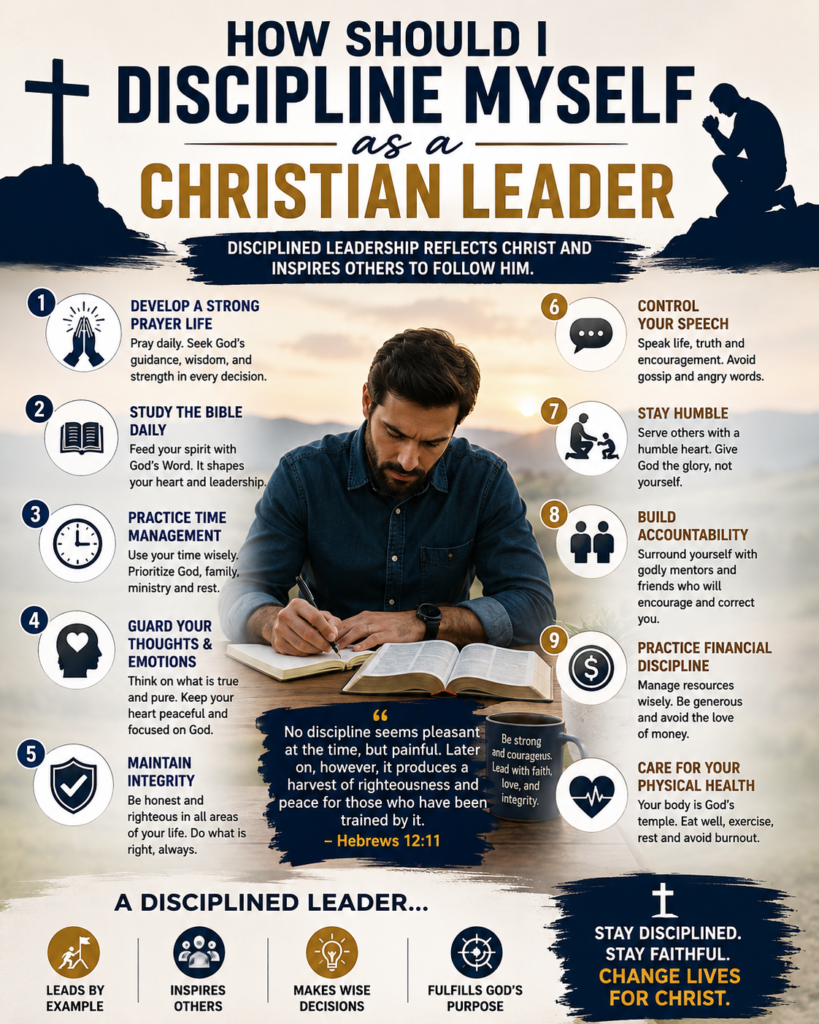
10 Ways Christian Leaders Can Discipline Themselves
1. Develop a Strong Prayer Life
Prayer is essential for spiritual discipline.
Through prayer, leaders:
- Seek God’s guidance
- Gain wisdom
- Build spiritual strength
- Develop intimacy with God
A disciplined prayer life helps leaders remain calm, focused, and spiritually sensitive.
Many successful Christian leaders set specific times for daily prayer. Consistency matters more than length.
Jesus frequently withdrew to pray, even during busy seasons of ministry.
2. Study the Bible Daily
The Bible provides wisdom, correction, encouragement, and direction.
Christian leaders should not rely only on sermons or church teachings. Personal Bible study is necessary for growth.
Daily Scripture reading helps leaders:
- Understand God’s truth
- Resist temptation
- Make wise decisions
- Teach others effectively
A practical Bible study routine may include:
- Reading Scripture daily
- Taking notes
- Memorizing verses
- Reflecting on lessons
A helpful resource for Bible study tools is Bible Gateway.
3. Practice Time Management
Time is one of God’s gifts. Undisciplined leaders often become overwhelmed because they misuse time.
Christian leaders should prioritize:
- Prayer
- Family
- Ministry
- Rest
- Personal growth
Good time management reduces stress and increases effectiveness.
Simple habits like creating schedules, setting priorities, and avoiding distractions can improve productivity significantly.
4. Guard Your Thoughts and Emotions
Leadership can bring criticism, stress, and emotional pressure.
Disciplined leaders learn to manage their thoughts and emotions wisely.
This includes:
- Avoiding bitterness
- Controlling anger
- Rejecting negative thinking
- Trusting God during uncertainty
A leader’s inner life affects every outward action.
Positive spiritual habits help leaders maintain peace and emotional stability.
5. Maintain Integrity
Integrity means doing what is right even when nobody is watching.
Christian leaders must remain honest and trustworthy in:
- Finances
- Relationships
- Decisions
- Communication
Integrity builds credibility and protects leadership influence.
When leaders compromise integrity, trust is damaged quickly.
Disciplined leaders stay accountable and avoid situations that could harm their testimony.
6. Control Your Speech
Words have power.
Christian leaders should speak with wisdom, kindness, and truth.
Undisciplined speech can create:
- Conflict
- Gossip
- Misunderstanding
- Hurt feelings
Disciplined communication includes:
- Listening carefully
- Speaking respectfully
- Avoiding harmful criticism
- Encouraging others
Wise leaders think before they speak.
7. Stay Humble
Pride is one of the greatest dangers in leadership.
Christian leadership is about serving others, not seeking personal glory.
Humble leaders:
- Accept correction
- Value teamwork
- Give credit to others
- Depend on God
Jesus demonstrated humility by serving His disciples and caring for others selflessly.
Humility keeps leaders teachable and spiritually grounded.
8. Build Accountability
No leader should walk alone.
Accountability provides support, correction, and encouragement.
Christian leaders benefit from trusted mentors, pastors, or friends who can speak honestly into their lives.
Accountability helps prevent:
- Isolation
- Temptation
- Poor decisions
- Spiritual drift
Strong accountability relationships strengthen discipline and character.
9. Practice Financial Discipline
Money can become a major challenge for leaders if not managed wisely.
Christian leaders should practice:
- Budgeting
- Generosity
- Honesty
- Contentment
Financial discipline reflects stewardship and responsibility.
Leaders who handle money wisely build trust and avoid unnecessary stress.
10. Care for Your Physical Health
Physical health affects emotional and spiritual well-being.
Christian leaders often become busy serving others while neglecting themselves.
Healthy habits include:
- Regular exercise
- Proper rest
- Healthy eating
- Stress management
The body is a gift from God and should be cared for responsibly.
Balanced leaders often sustain long-term ministry more effectively.
Challenges Christian Leaders Face
Christian leaders face many pressures that make discipline difficult.
Common challenges include:
- Burnout
- Temptation
- Discouragement
- Criticism
- Spiritual dryness
- Overcommitment
Without discipline, these challenges can weaken leadership effectiveness.
That is why leaders must remain intentional about spiritual growth and personal health.
The Role of the Holy Spirit in Self-Discipline
Christian discipline is not achieved through human effort alone.
The Holy Spirit empowers believers to live with self-control and wisdom.
Galatians describes self-control as a fruit of the Spirit.
As leaders grow spiritually, the Holy Spirit helps them:
- Resist temptation
- Develop patience
- Make wise choices
- Grow in character
Dependence on God is essential for lasting discipline.
Biblical Examples of Disciplined Leaders
Many biblical leaders demonstrated strong discipline.
Daniel remained faithful to God despite pressure and opposition in Babylon.
Nehemiah showed discipline through prayer, planning, and perseverance while rebuilding Jerusalem’s walls.
Paul the Apostle practiced spiritual discipline through prayer, sacrifice, teaching, and endurance during hardships.
These leaders remind us that discipline strengthens faith and leadership influence.
How Discipline Strengthens Ministry and Influence
Disciplined leaders often experience:
- Greater spiritual maturity
- Better decision-making
- Stronger relationships
- Increased trust
- Long-term ministry effectiveness
People are naturally drawn to leaders who demonstrate consistency, integrity, and wisdom.
Discipline also helps leaders remain faithful during difficult seasons.
Common Mistakes Christian Leaders Should Avoid
Neglecting Personal Time with God
Ministry work should never replace personal spiritual growth.
Trying to Please Everyone
Leaders must seek God’s approval above human approval.
Ignoring Rest
Rest is necessary for physical and spiritual renewal.
Refusing Accountability
Isolation increases vulnerability to temptation and poor judgment.
Leading Without Humility
Pride can damage ministries and relationships.
Avoiding these mistakes helps leaders remain spiritually healthy and effective.
FAQs
Why is discipline important for Christian leaders?
Discipline helps Christian leaders remain spiritually strong, morally grounded, and effective in guiding others.
How can Christian leaders grow spiritually?
Through prayer, Bible study, worship, accountability, and obedience to God.
What does the Bible say about self-discipline?
The Bible teaches that self-control is part of spiritual maturity and a fruit of the Holy Spirit.
How can leaders avoid burnout in ministry?
By balancing work, rest, prayer, family, and personal health.
Can discipline improve leadership effectiveness?
Yes. Disciplined leaders make better decisions, communicate clearly, and build stronger trust.
What is the biggest challenge for Christian leaders?
Common challenges include temptation, stress, pride, discouragement, and balancing responsibilities.
Conclusion
The question “how should I discipline myself as a Christian leader” is deeply important for anyone who desires to lead faithfully and effectively.
Christian discipline is not about perfection. It is about consistent growth, obedience, and dependence on God. Through prayer, Bible study, humility, accountability, and wise habits, leaders can strengthen their character and leadership influence.
Disciplined leaders inspire trust, build healthy relationships, and serve others with integrity. More importantly, they reflect the heart and character of Christ.
In a world filled with distractions and challenges, self-discipline remains one of the greatest strengths a Christian leader can develop. By staying rooted in God’s Word and guided by the Holy Spirit, leaders can fulfill their calling with wisdom, courage, and faithfulness.