
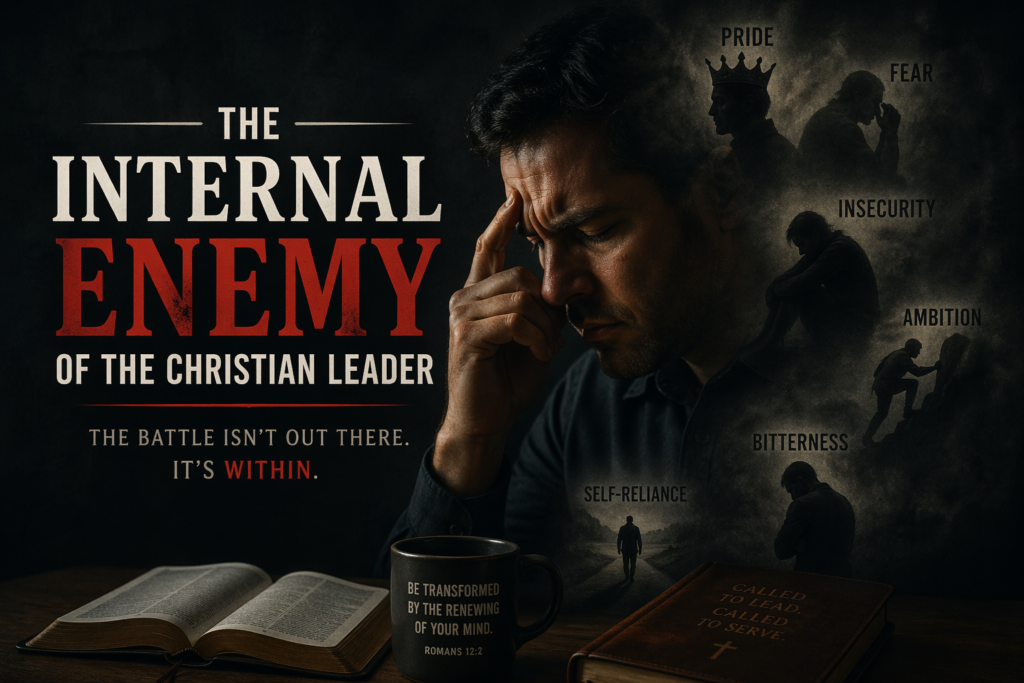

Every leader faces challenges, but the most dangerous ones are not external—they come from within. The Internal Enemy of the Christian Leader is a silent but powerful force that can weaken faith, distort judgment, and hinder effective leadership.
While many focus on external pressures such as criticism, opposition, or responsibilities, the true battle often lies in the heart and mind. Internal struggles like pride, fear, doubt, and burnout can quietly grow if left unchecked.
Understanding and addressing these internal enemies is essential for any Christian leader who desires to lead with integrity, strength, and spiritual authority.
Understanding the Concept of Internal Struggles
Internal struggles are the thoughts, emotions, and attitudes that conflict with God’s truth. These struggles are often subtle, making them difficult to detect.
Unlike external challenges, internal enemies:
- Operate quietly
- Affect decision-making
- Influence behavior over time
Why Internal Battles Matter More Than External Ones
External challenges can test a leader, but internal battles define them. A leader may overcome opposition, but if they lose control internally, their leadership is compromised.
This is why guarding the heart is critical. The internal condition of a leader determines their outward effectiveness.
What Is The Internal Enemy of the Christian Leader?
Definition and Core Meaning
The Internal Enemy of the Christian Leader refers to the personal weaknesses and sinful tendencies that hinder spiritual growth and leadership effectiveness. These enemies are not visible but are deeply influential.
They include attitudes and behaviors that conflict with Christian values and leadership principles.
Biblical Perspective on Inner Conflict
The Bible emphasizes the importance of inner transformation. It teaches that true change begins within and that leaders must continually renew their minds and hearts.
Inner conflict is a natural part of spiritual growth, but it must be addressed intentionally.
Common Internal Enemies Christian Leaders Face
Pride and Self-Exaltation
Pride is one of the most dangerous internal enemies. It leads leaders to rely on their own strength rather than God.
Signs of pride include:
- Seeking recognition
- Ignoring advice
- Overestimating abilities
Fear and Insecurity
Fear can paralyze leaders and prevent them from making bold decisions. Insecurity may cause leaders to doubt their calling or seek constant approval.
Doubt and Unbelief
Doubt weakens faith and creates uncertainty. When leaders struggle with unbelief, it affects their confidence and ability to inspire others.
Burnout and Weariness
Constant demands can lead to exhaustion. Burnout reduces effectiveness and can lead to emotional and spiritual decline.
The Root Causes of Internal Struggles
Lack of Spiritual Discipline
Without consistent prayer, study, and reflection, leaders become spiritually weak. Discipline strengthens the inner life.
Disconnection from God
When leaders drift away from God, they lose clarity and direction. This disconnection creates vulnerability to internal enemies.
Emotional and Mental Pressure
Leadership comes with stress and responsibility. Without proper coping mechanisms, this pressure can lead to internal struggles.
The Impact of Internal Enemies on Leadership
Decision-Making Challenges
Internal conflicts can cloud judgment. Leaders may make decisions based on fear or pride rather than wisdom.
Strained Relationships
Internal struggles often affect how leaders interact with others. This can lead to misunderstandings and conflict.
Loss of Spiritual Authority
When internal issues go unchecked, leaders may lose credibility and influence. Spiritual authority depends on integrity and alignment with God.
Recognizing the Warning Signs
Behavioral Changes
Sudden changes in behavior can indicate internal struggles. These may include irritability, withdrawal, or inconsistency.
Spiritual Dryness
A lack of passion for spiritual practices is a key warning sign. Leaders may feel disconnected or unmotivated.
Isolation from Community
Isolation can make internal struggles worse. Leaders who withdraw from support systems become more vulnerable.
Overcoming The Internal Enemy of the Christian Leader
Prayer and Repentance
Prayer is the foundation of spiritual strength. Repentance allows leaders to realign with God and seek forgiveness.
Renewing the Mind Through Scripture
Scripture provides guidance and truth. Regular study helps leaders replace negative thoughts with God’s promises.
Accountability and Mentorship
Having trusted mentors and accountability partners helps leaders stay grounded and focused.
Strengthening the Inner Life
Developing Spiritual Discipline
Consistency in spiritual practices builds strength and resilience. This includes prayer, fasting, and meditation.
Cultivating Humility
Humility keeps leaders grounded. It reminds them that their strength comes from God.
Building Emotional Resilience
Resilience helps leaders handle challenges without becoming overwhelmed. It involves managing stress and maintaining a positive outlook.
The Role of Grace in Leadership
Accepting God’s Grace
Grace provides forgiveness and renewal. Leaders must accept God’s grace to overcome their weaknesses.
Extending Grace to Others
Leaders who experience grace are better equipped to show compassion to others. This creates a supportive and understanding environment.
Frequently Asked Questions
1. What is The Internal Enemy of the Christian Leader?
It refers to inner struggles such as pride, fear, doubt, and burnout that hinder leadership effectiveness.
2. Why are internal struggles dangerous for leaders?
They can quietly influence decisions, relationships, and spiritual health.
3. How can leaders overcome internal enemies?
Through prayer, scripture, accountability, and spiritual discipline.
4. What are common signs of internal struggles?
Behavioral changes, spiritual dryness, and isolation are key indicators.
5. Can internal struggles be completely eliminated?
Not entirely, but they can be managed and reduced through consistent effort and faith.
6. Why is humility important in leadership?
Humility keeps leaders grounded and dependent on God rather than themselves.
Conclusion
The Internal Enemy of the Christian Leader is a reality that cannot be ignored. While external challenges may be visible, internal struggles often pose the greatest threat to effective leadership.
However, these challenges also present an opportunity for growth. By recognizing and addressing internal enemies, leaders can develop stronger character, deeper faith, and greater resilience.
True leadership begins within. When the inner life is healthy, the outer leadership becomes powerful and impactful. By embracing humility, practicing discipline, and relying on God’s grace, Christian leaders can overcome their internal enemies and lead with purpose, strength, and integrity.



Pingback: Calling: How to Recognize God's Calling over your life