
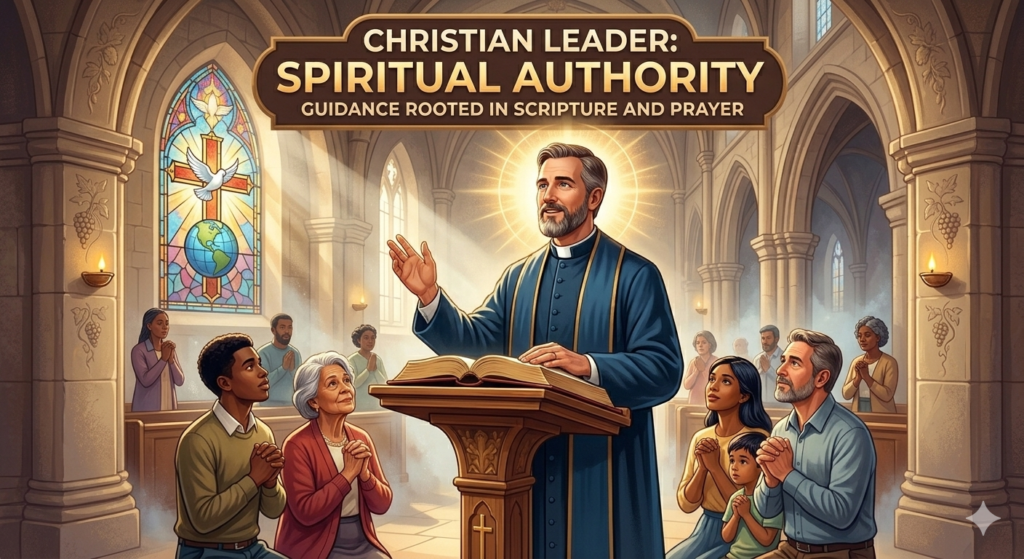

The spiritual authority of a Christian leader is one of the most important and often misunderstood aspects of Christian leadership. It is not about control, dominance, or personal power. Instead, it reflects a God-given responsibility to lead, guide, and serve others according to divine principles.
In today’s world, leadership is often associated with influence, fame, or status. However, in Christianity, authority takes on a completely different meaning. It is rooted in humility, obedience, and a deep relationship with God. A Christian leader’s authority flows not from personal ambition but from spiritual alignment with God’s will.
Definition of Spiritual Authority
Spiritual authority refers to the divine right and responsibility that God gives to lead others in faith. It thus involves guiding individuals toward truth, righteousness, and spiritual growth.
This authority is not self-appointed. Rather, it is recognized through:
- A consistent walk with God, by developing a specific relationship with him
- An Alignment with biblical teachings
- An evidence of the fruit of the spirit
Biblical Foundations of Authority
The Bible clearly outlines the concept of authority. From prophets to apostles, God chooses and empowers spiritual leaders. Scripture emphasizes that all authority ultimately comes from God and is entrusted to individuals for service.
Key principles on this include:
- the fact that authority is delegated, not owned
- knowing that leaders are stewards, not rulers
- and bringing accountability to God is essential
The Source of Spiritual Authority
Authority Derived from God
The spiritual authority of a Christian leader originates from God alone. No human institution can truly grant it. While churches may appoint leaders, genuine authority is confirmed through spiritual maturity and divine calling.
A leader without God’s backing may have a title but lacks true influence in the spiritual realm.
Role of the Holy Spirit
The Holy Spirit plays a central role in empowering leaders. Through the Spirit, leaders receive:
- Wisdom
- Discernment
- Courage
Spiritual Gifts and Leadership
Spiritual gifts such as teaching, prophecy, and leadership help individuals function effectively in their roles. These gifts are not for personal gain but for building up the community.
Characteristics of a Christian Leader with Authority
Humility and Servanthood
True spiritual authority is marked by humility. A Christian leader does not seek to be served but chooses to serve others. This servant-leadership model reflects the heart of Christ.
Integrity and Righteous Living
Integrity is essential. Leaders must live lives that align with their teachings. Without integrity, authority quickly loses credibility.
Faith and Obedience
Faith fuels leadership. Obedience ensures alignment with God’s will. Together, they form the foundation of lasting authority.
Responsibilities Tied to Spiritual Authority
Teaching and Guiding Others
A major responsibility is teaching truth and guiding others in their spiritual journey. This includes:
- Explaining scripture
- Offering counsel
- Encouraging growth
Protecting the Church
Leaders must guard against false teachings and harmful influences. This requires vigilance and discernment.
Accountability Before God
Every Christian leader will ultimately answer to God. This accountability should inspire careful, prayerful leadership.
Misuse and Abuse of Spiritual Authority
Warning Signs of Abuse
Unfortunately, spiritual authority can be misused. Warning signs include:
- Manipulation or control
- Lack of transparency
- Elevating self above others
Consequences of Misuse
Abuse damages individuals and communities. It can lead to:
- Loss of trust
- Spiritual harm
- Division within the church
Restoring Trust and Healing
Healing requires honesty, repentance, and accountability. Communities must prioritize restoration while upholding truth.
Spiritual Authority vs. Worldly Power
Differences in Leadership Styles
Worldly power focuses on control and recognition. Spiritual authority emphasizes service and sacrifice.
| Spiritual Authority | Worldly Power |
|---|---|
| Serves others | Seeks control |
| Guided by God | Driven by ego |
| Builds community | Creates hierarchy |
Servant Leadership Model
The servant leadership model is central to Christianity. Leaders lead by example, putting others first and demonstrating love in action.
Developing Spiritual Authority
Prayer and Intimacy with God
Prayer is essential. It strengthens the relationship between the leader and God, ensuring guidance and clarity.
Studying Scripture
A deep understanding of scripture equips leaders to teach and lead effectively.
Mentorship and Discipleship
Learning from experienced leaders helps develop wisdom and maturity.
The Role of Community in Affirming Authority
Church Recognition
While authority comes from God, the community often recognizes and affirms it. This recognition provides support and accountability.
Spiritual Accountability Structures
Accountability structures help leaders stay grounded and prevent misuse of authority.
Challenges Faced by Christian Leaders
Spiritual Warfare
Leaders often face spiritual opposition. This requires strength, faith, and resilience.
Balancing Authority and Compassion
Maintaining authority while showing compassion can be challenging. Leaders must navigate this balance carefully.
Frequently Asked Questions
1. What is the spiritual authority of a Christian leader?
It is the God-given responsibility to lead, guide, and serve others in alignment with biblical principles.
2. How does a Christian leader receive spiritual authority?
Through a divine calling, spiritual growth, and recognition of their gifts and character.
3. Can spiritual authority be misused?
Yes, when leaders prioritize personal gain over service, it can lead to abuse and harm.
4. What qualities define a strong Christian leader?
Humility, integrity, faith, obedience, and a commitment to serving others.
5. Why is accountability important in leadership?
It ensures leaders remain aligned with God’s will and prevents misuse of authority.
6. How can someone grow in spiritual authority?
Through prayer, studying scripture, mentorship, and consistent obedience to God.
Conclusion
The spiritual authority of a Christian leader is a sacred trust, not a personal achievement. It is rooted in humility, shaped by obedience, and sustained through a deep relationship with God. True authority does not demand respect—it earns it through service, integrity, and love.
In a world that often misunderstands leadership, Christian leaders are called to stand apart. They lead not by force, but by example. They influence not through control, but through compassion. And ultimately, their authority reflects the heart of God—a heart committed to guiding, restoring, and uplifting others.


C’est très instructif et utile pour un bon leadership selon le coeur de Dieu.
Que Seigneur vous bénisse abondamment papa
Merci beaucoup Homme De Dieu.
Que le Seigneur nous aide à être de bon leaders selon le coeur de Dieu
Merci beaucoup on apprend d’avantage
Pingback: Loyal Followers in Christian Leadership: 10 Biblical Principles for Building Faithful Kingdom Relationships - Fillenium
Pingback: David's Leadership and His Heart Toward God - Fillenium