
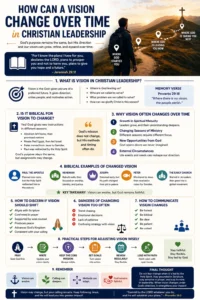

How can a vision change over time based on Christian leadership? This is an important question for pastors, ministry leaders, business owners, nonprofit directors, and anyone called to guide others with faith. Vision is not a static idea. It is a God-given direction that often grows, deepens, and shifts as circumstances, people, and spiritual understanding develop.
Christian leadership teaches that vision must remain rooted in God’s truth while being flexible enough to respond to changing needs. Leaders who refuse to adapt can become stuck. Leaders who change without biblical grounding can lose their way. The challenge is learning how to grow a vision without abandoning the mission.
Throughout Scripture, we see leaders like Moses, Nehemiah, David, Paul, and Jesus Himself lead people through seasons of transition. Their core purpose stayed the same, but their methods, timing, and focus often changed.
In this article, we’ll explore how a vision changes over time through Christian leadership, why change is necessary, and how to navigate it with wisdom and faith.
What Is Vision in Christian Leadership?
Vision in Christian leadership is the ability to see God’s preferred future and guide others toward it. It is more than ambition or strategy. It is spiritual insight aligned with biblical truth.
Proverbs 29:18 says, “Where there is no vision, the people perish.” Vision gives direction, unity, and hope.
Christian vision usually includes:
- A sense of calling from God
- A burden to serve others
- Clear goals rooted in biblical values
- A long-term kingdom perspective
- Faith to move forward despite obstacles
Unlike worldly leadership, Christian vision focuses not only on success but on obedience.
Why Vision Often Changes Over Time
Many people think vision should never change. In reality, the mission may stay the same while the expression of the vision evolves.
There are several reasons this happens.
1. Spiritual Growth Brings Greater Clarity
As leaders mature in faith, they often understand God’s direction more deeply. What once seemed clear may become more refined.
For example:
- A leader may begin with a desire to “help youth.”
- Later, that becomes a clear calling to mentor fatherless young men.
- Over time, it may grow into building leadership academies.
The original heart remains, but clarity increases.
2. Circumstances Change
Communities, churches, economies, and cultures shift. A vision must respond wisely.
A church once focused on building attendance may later realize the greater need is discipleship, outreach, or digital ministry.
3. God Opens New Doors
Sometimes vision changes because God provides unexpected opportunities.
Paul planned to preach in Asia, but Acts 16 shows the Holy Spirit redirected him to Macedonia. God’s purpose remained, but the route changed.
4. People Needs Change
Christian leaders serve people, and people’s needs evolve. Vision should listen compassionately.
A ministry feeding families may later discover the need for job training, counseling, or education.
Biblical Examples of Vision Changing Over Time
Moses: From Deliverer to Nation Builder
Moses first saw his role as rescuing Israelites from oppression. Later, he became a lawgiver, shepherd, judge, and mentor.
His vision expanded with each season.
Nehemiah: From Wall Builder to Community Reformer
Nehemiah began with rebuilding Jerusalem’s walls. After the walls were complete, the vision shifted toward spiritual renewal, worship, and justice.
David: From Shepherd to King
David’s early calling was personal faithfulness. Later, it became national leadership and preparing for the temple.
Paul: From Missionary to Mentor
Paul started planting churches. Later, he focused heavily on training leaders like Timothy and Titus.
These examples show that God often develops vision progressively.
How Christian Leaders Discern When Vision Should Change
Changing vision should never be impulsive. Christian leaders need discernment.
1. Prayer and Seeking God
Before any shift, prayer is essential. Leaders must ask:
- Lord, are You redirecting us?
- Is this fear or faith?
- Is this temporary pressure or divine guidance?
Jesus often withdrew to pray before major decisions.
2. Scripture Alignment
Any new direction must agree with God’s Word. Vision can adapt, but truth does not change.
3. Wise Counsel
Proverbs teaches safety in many counselors. Mature leaders invite feedback from trusted believers.
4. Fruit Evaluation
Jesus said we know things by their fruit. If a vision is producing burnout, confusion, or spiritual emptiness, reassessment may be needed.
What Should Never Change in Christian Vision
Even when methods evolve, some foundations remain fixed.
The Gospel
The message of Christ never changes.
Biblical Integrity
Ethics, holiness, honesty, and love remain constant.
Service to Others
Leadership is servant-hearted, not self-centered.
God’s Glory
The goal is never personal fame but honoring God.
These anchors keep evolving vision from drifting into compromise.
Practical Ways Vision Can Change Today
Church Leadership
A church may move from:
- Attractional programs → intentional discipleship
- Building-centered ministry → community outreach
- Local-only ministry → online global impact
Business Leadership
A Christian business owner may shift from:
- Profit-first thinking → purpose-driven leadership
- Transactional culture → employee care
- Local service → kingdom partnerships
Nonprofit Leadership
A nonprofit may transition from:
- Short-term relief → long-term empowerment
- Individual help → systems change
- Reactive giving → sustainable development
Challenges That Come With Vision Change
Vision change is powerful, but it is not easy.
Resistance from People
Some people prefer familiarity. They may confuse tradition with faithfulness.
Fear of Failure
Leaders may worry about criticism or uncertainty.
Loss During Transition
Not everyone will stay during change. This can be painful.
Internal Doubt
Even strong leaders question themselves during transition seasons.
That is why courage and humility are both necessary.
How to Lead Others Through a Changing Vision
1. Communicate Clearly
People support what they understand. Explain:
- Why change is needed
- What remains the same
- What the future looks like
2. Honor the Past
Never insult previous seasons. Celebrate what God has done before describing what comes next.
3. Move Gradually When Possible
Sudden change creates confusion. Wise pacing builds trust.
4. Stay Spiritually Grounded
Leadership transitions require prayer, worship, and dependence on God.
Signs God May Be Expanding Your Vision
You may sense vision changing if:
- You feel holy dissatisfaction with current results
- New burdens consistently stir your heart
- Doors open unexpectedly
- Trusted mentors confirm the shift
- Old methods no longer fit present needs
- You sense peace despite uncertainty
Not every new idea is from God, but repeated confirmation matters.
When Vision Change Becomes Dangerous
Not all change is healthy.
Beware of:
- Chasing trends instead of truth
- Changing vision to please people
- Abandoning biblical values for growth
- Moving faster than character can sustain
- Copying another leader’s assignment
Christian leadership requires discernment, not imitation.
FAQs
1. Can a God-given vision really change?
Yes. The core calling may remain the same, but how it is carried out can evolve over time.
2. Does changing vision mean the first vision was wrong?
Not necessarily. Often the first vision was the beginning stage of something larger.
3. How do I know if change is from God or personal desire?
Pray, compare it with Scripture, seek wise counsel, and observe spiritual fruit.
4. Should churches change their vision often?
No. Constant change creates instability. Vision should shift only with prayerful clarity.
5. Can business leaders use Christian vision principles?
Absolutely. Christian leadership applies in business, family, ministry, and community settings.
6. What if people resist the new vision?
Lead patiently, communicate clearly, and trust God with the results.
Conclusion
So, how can a vision change over time based on Christian leadership? It changes through growth, prayer, wisdom, experience, and God’s unfolding guidance. The mission may remain rooted in Scripture, but the strategy, scope, and expression often mature with time.
Strong Christian leaders understand that vision is not a monument to protect—it is a calling to steward. They listen to God, serve people faithfully, and adapt without compromising truth.
If God gave you a vision years ago, do not assume it must look the same forever. Ask Him whether He is refining it, enlarging it, or redirecting it for a new season.
Because in Christian leadership, vision does not merely survive change—it often becomes clearer through it.
For more biblical leadership insights, visit