
When we ask, is leadership a natural talent or a learned skill according to Christian principles, we are exploring a deep and meaningful question. Leadership, especially in a Christian context, goes beyond skills and abilities—it touches the heart, faith, and purpose of a person.
Understanding Leadership from a Biblical Perspective
In the Bible, leadership is not about power or status. Instead, it is about service, obedience, and faithfulness to God. Christian leaders are called to guide others while reflecting God’s love and truth.
Leadership is seen as both a responsibility and a calling. It involves influencing others in a way that honors God and helps people grow spiritually.
Why This Question Matters Today
In today’s world, many people wonder if leaders are born or made. This question is important because it affects how we view ourselves and our potential. If leadership is only natural talent, some may feel excluded. But if it can be learned, then anyone willing to grow can become a leader.
Natural Talent in Leadership
Some people seem to have leadership qualities from a young age. They are confident, decisive, and able to guide others easily.
God-Given Gifts and Abilities
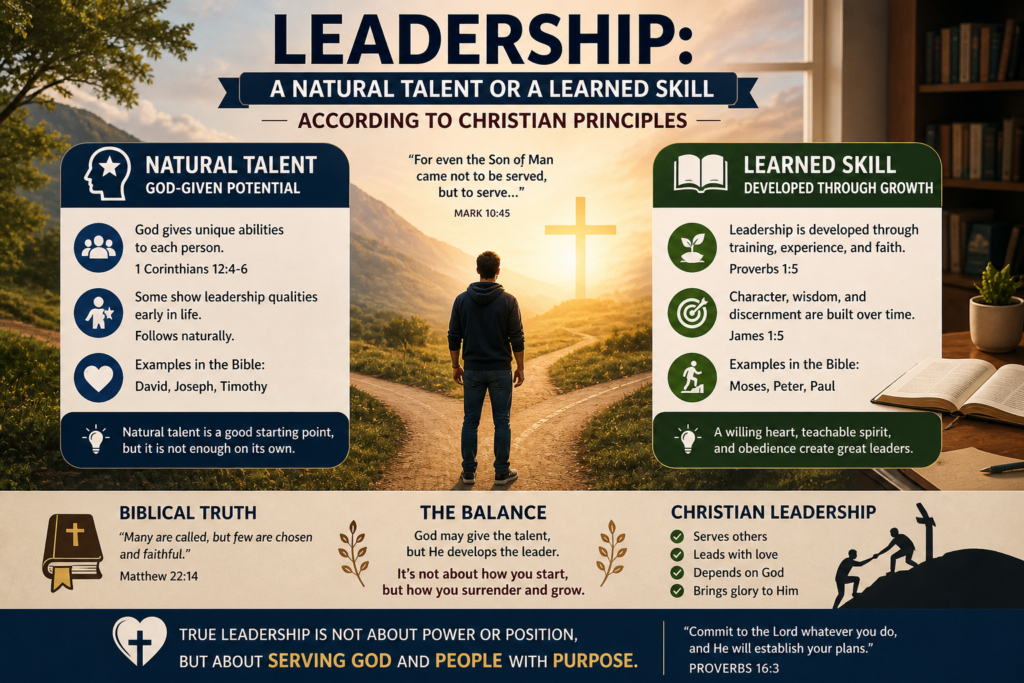
According to Christian principles, every person is created with unique gifts. These gifts come from God and can include leadership abilities.
Natural talents may include:
- Strong communication skills
- Confidence in decision-making
- Ability to inspire others
- Organizational skills
These gifts can give someone a strong starting point in leadership.
Examples of Natural Leaders in the Bible
The Bible shows examples of individuals who displayed leadership qualities early in life. For instance:
- David showed courage and faith even as a young shepherd
- Joseph demonstrated wisdom and leadership while still young
However, even these individuals needed growth and guidance.
Leadership as a Learned Skill
While natural talent plays a role, Christian leadership is also something that can be developed over time.
Growth Through Experience
Leadership skills often grow through real-life experiences. Challenges, failures, and successes all shape a person into a stronger leader.
Christian leaders learn by:
- Facing difficult situations
- Making mistakes and learning from them
- Seeking advice from others
Experience teaches lessons that cannot be learned in theory alone.
Spiritual Training and Discipline
Spiritual growth is essential for leadership. Practices such as prayer, studying scripture, and serving others help develop leadership abilities.
These disciplines build:
- Patience
- Wisdom
- Self-control
- Compassion
Over time, these qualities strengthen leadership.
The Balance Between Talent and Learning
The truth is, leadership is both a natural talent and a learned skill.
How God Shapes Leaders Over Time
God often chooses ordinary people and shapes them into leaders. This process includes:
- Teaching humility
- Building faith
- Strengthening character
Leadership is not instant—it is a journey.
The Role of Obedience and Faith
Obedience to God is more important than natural ability. A person who listens to God and follows His guidance can become a strong leader, even without natural talent.
Faith allows leaders to trust God in uncertain situations.
Biblical Examples of Leadership Development
The Bible provides powerful stories of individuals who grew into leadership roles.
Moses: From Reluctance to Leadership
Moses initially doubted his ability to lead. He felt unqualified and afraid. However, through God’s guidance, he became a strong and effective leader.
David: From Shepherd to King
David started as a simple shepherd. Over time, he grew into a great king. His journey included challenges, mistakes, and learning experiences.
Peter: From Fisherman to Apostle
Peter was impulsive and often made mistakes. Yet, through growth and transformation, he became a bold and influential leader in the early church.
These examples show that leadership can be developed.
The Role of the Holy Spirit in Leadership
Guidance and Wisdom
The Holy Spirit plays a key role in Christian leadership. It provides guidance, wisdom, and understanding.
Leaders rely on the Holy Spirit to make decisions and navigate challenges.
Transformation of Character
The Holy Spirit also transforms a leader’s character. It helps develop qualities such as:
- Love
- Patience
- Kindness
- Self-control
These qualities are essential for effective leadership.
Key Qualities of Christian Leaders
Love and Humility
Love is the foundation of Christian leadership. It shapes how leaders treat others and make decisions.
Humility ensures that leaders serve others rather than seeking personal gain.
Integrity and Faith
Integrity builds trust. Faith keeps leaders grounded in their relationship with God.
Together, these qualities create strong and reliable leadership.
Practical Ways to Develop Leadership Skills
Daily Spiritual Habits
To grow as a leader:
- Pray regularly
- Study the Bible
- Reflect on personal growth
- Seek God’s guidance
These habits strengthen both faith and leadership ability.
Learning Through Service
Serving others is one of the best ways to develop leadership skills. It teaches empathy, patience, and responsibility.
Leadership is not just about leading—it is about serving.
Common Misconceptions About Leadership
Leadership is Only for the Gifted
Many people believe only naturally gifted individuals can lead. However, Christian principles show that leadership can be developed by anyone willing to grow.
Leadership Requires Perfection
No leader is perfect. Mistakes are part of the journey. What matters is learning, growing, and staying faithful.
FAQs
1. Is leadership a natural talent or a learned skill according to Christian principles?
It is both. Leadership can begin with natural gifts but is developed through experience, faith, and spiritual growth.
2. Can anyone become a Christian leader?
Yes, anyone who is willing to grow spiritually and serve others can become a leader.
3. Why does God choose ordinary people as leaders?
God often chooses ordinary people to show that leadership depends on Him, not human ability.
4. How can I improve my leadership skills as a Christian?
Focus on prayer, study scripture, serve others, and seek guidance from mentors.
5. What role does faith play in leadership?
Faith provides strength, direction, and trust in God’s plan.
6. Do leaders need formal training?
While training can help, spiritual growth and experience are more important in Christian leadership.
Conclusion
So, is leadership a natural talent or a learned skill according to Christian principles? The answer is clear: it is both.
God gives individuals unique talents, but He also shapes and develops leaders over time. Through faith, experience, and spiritual growth, anyone can become an effective Christian leader.
Leadership is not about being perfect or naturally gifted—it is about being willing to grow, serve, and follow God’s guidance. With the right heart and commitment, leadership becomes a journey of transformation and purpose.