


Leadership without vision is like a ship without a compass. It may move, but it drifts without clear direction. This is especially true in Christian leadership. If you have ever asked, why do Christian leaders need vision, the answer is both practical and spiritual.
Vision gives leaders clarity, purpose, and direction. It helps them understand where God may be leading, how to serve people effectively, and how to stay focused during challenges. Christian leaders are not called merely to manage tasks—they are called to guide people with wisdom, faith, and intentionality.
Whether leading a church, ministry, business, family, or community, vision is essential for lasting impact.
In this article, we’ll explore why Christian leaders need vision, how vision works biblically, and how leaders can develop and protect God-centered vision.
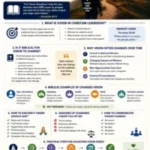
What Is Vision in Christian Leadership?
Vision is the ability to see beyond the present and recognize a preferred future aligned with God’s purposes.
It is not just ambition or personal dreams. Christian vision is rooted in prayer, wisdom, Scripture, and service.
A leader with vision can answer questions like:
- Where are we going?
- Why does this matter?
- How can we serve faithfully?
- What is God calling us to build or change?
- How do we stay focused?
Vision gives meaning to effort.
Jesus Christ demonstrated vision constantly—He knew His mission, stayed focused despite opposition, and led others with clarity.
1. Vision Provides Direction
One major reason Christian leaders need vision is because people need direction.
Without direction:
- Teams become confused
- Energy gets wasted
- Priorities become unclear
- Progress slows down
- People lose motivation
Vision helps leaders say:
- This is our purpose
- These are our priorities
- This is what matters most right now
Direction reduces chaos.
Imagine a ministry with many volunteers but no clear mission. People may be busy, but busyness is not the same as progress. Vision organizes effort.
2. Vision Helps Leaders Stay Focused
Leaders face constant distractions:
- Urgent problems
- Criticism
- Opportunities that don’t fit the mission
- Internal conflict
- Fear and discouragement
Vision becomes a filter.
Instead of chasing everything, wise leaders ask:
- Does this align with our calling?
- Will this move us forward?
- Is this distraction or assignment?
Focus is one of leadership’s greatest strengths.
Nehemiah stayed focused while rebuilding Jerusalem’s walls despite opposition and distractions.
3. Vision Inspires People
People are rarely inspired by tasks alone. They are inspired by purpose.
A Christian leader with vision can help people see that their contribution matters.
Examples:
- Volunteers are not just stacking chairs—they are helping create a welcoming place.
- Teachers are not just managing classes—they are shaping lives.
- Church members are not just attending—they are part of a mission.
Vision transforms routine work into meaningful service.
People are more willing to sacrifice, serve, and persevere when they understand the bigger picture.
4. Vision Strengthens Faith During Difficult Seasons
Every leader faces setbacks:
- Financial pressure
- Slow growth
- Criticism
- Unexpected losses
- Delayed results
Without vision, challenges can feel pointless.
With vision, leaders remember why they started and what God may still be doing.
Vision does not remove pain—but it gives pain context.
Moses endured wilderness challenges because he carried a long-term vision of leading people toward promise and freedom.
5. Vision Encourages Wise Planning
Christian leadership requires faith, but faith does not eliminate planning.
Vision helps leaders plan wisely by asking:
- What resources are needed?
- What should happen first?
- Who needs training?
- What goals should be measured?
- What must change now to prepare for later?
Vision turns hopes into strategy.
Many leaders fail not because they lacked passion, but because they lacked a clear roadmap.
6. Vision Builds Unity
Where there is no shared vision, division often grows.
People begin pulling in different directions because they do not understand the common mission.
Vision unites teams by creating shared purpose.
It helps people say:
- We are building this together
- We know why this matters
- We understand our role
Unity becomes easier when purpose is clear.
Paul the Apostle often united diverse communities around a common spiritual mission.
7. Vision Protects Leaders from Drift
Drift happens slowly.
A leader may begin with strong values, then become consumed by:
- Popularity
- Money
- Ego
- Endless activity
- Comparison with others
Vision anchored in God helps leaders remember:
- Who they serve
- Why they lead
- What truly matters
- What success really means
Not every growth opportunity is the right opportunity.
Vision guards identity.
8. Vision Creates Future Leaders
Great leaders do not only think about today. They prepare others for tomorrow.
Vision-minded Christian leaders ask:
- Who can I mentor?
- Who can grow into responsibility?
- How do we build something sustainable?
Leadership without succession often collapses when one person leaves.
Vision sees beyond self.
Timothy benefited from mentorship and preparation through Paul the Apostle.
9. Vision Helps Measure Progress
Without vision, leaders cannot know whether they are succeeding.
Activity alone can be misleading.
A church may be busy. A business may be active. A team may be working hard. But are they advancing the mission?
Vision helps leaders evaluate:
- Are lives being changed?
- Are goals being reached?
- Are people growing?
- Are resources being used wisely?
Measurement becomes meaningful when tied to mission.
10. Vision Honors God Through Intentional Stewardship
Christian leaders are stewards of time, people, influence, and resources.
Vision helps leaders use these gifts responsibly rather than carelessly.
When leaders act intentionally, they better honor the opportunities entrusted to them.
Good stewardship asks:
- Are we wasting potential?
- Are we serving faithfully?
- Are we multiplying impact?
Vision helps answer yes to these questions.
What Happens When Leaders Lack Vision?
Without vision, leaders often experience:
Confusion
People do not know where they are going.
Burnout
Energy gets spent on low-value activity.
Conflict
Different people pursue different priorities.
Discouragement
Effort feels meaningless.
Stagnation
No progress, no momentum, no growth.
This is why vision is not optional—it is foundational.
How Can Christian Leaders Develop Vision?
Vision is not always instant. Sometimes it grows over time.
1. Pray Regularly
Ask God for wisdom, clarity, and discernment.
2. Study Scripture
Biblical principles shape healthy vision.
3. Understand Needs
Look at the people and problems around you.
4. Listen to Wise Counsel
Mentors and trusted advisors can refine direction.
5. Start Serving
Often vision becomes clearer through action.
6. Write It Down
Clear written vision helps commitment and communication.
How to Communicate Vision Effectively
A leader may have vision but still fail if no one understands it.
Communicate Vision by:
- Repeating it clearly
- Using simple language
- Connecting it to values
- Showing practical next steps
- Celebrating progress
- Living it personally
Vision must be seen in the leader before it is believed by others.
Common Mistakes Christian Leaders Make About Vision
1. Confusing Vision with Ego
Not every personal desire is divine direction.
2. Making Vision Too Vague
If no one understands it, no one can follow it.
3. Refusing Adjustment
Vision may stay constant while methods change.
4. Keeping Vision Private
Teams need clarity, not secrecy.
5. Ignoring Character
A strong vision with weak character leads badly.
FAQs: Why Do Christian Leaders Need Vision?
1. Is vision the same as goals?
No. Vision is the larger picture; goals are steps toward it.
2. Can small leaders need vision too?
Yes. Whether leading two people or two thousand, direction matters.
3. What if my vision changes over time?
That can be normal. Core purpose may remain while methods evolve.
4. Can vision exist without faith?
Many people have goals, but Christian vision seeks alignment with God’s purposes.
5. What if I don’t know my vision yet?
Keep praying, serving, learning, and paying attention. Clarity often grows gradually.
Final Thoughts
If you ask, why do Christian leaders need vision, the answer is simple: vision gives direction, inspires people, strengthens faith, builds unity, and helps leaders steward their calling well.
Christian leadership is not only about handling today—it is about seeing beyond today with wisdom and faith.
You do not need to know every detail before beginning. But you do need a sense of purpose.
Start today by asking:
- What has God placed in my heart?
- Who am I called to serve?
- What future should I help build?
- What next faithful step can I take?
Vision often begins with one clear step taken in faith.
A leader with vision can change the future—one decision at a time.


Je suis parfaitement convaincu de la véracité de ce article.je pense que Sens Vision Pas de leadership.
La Vision est l’oeil d’un leader.
Que Dieu bénisse abondamment l’écrivain
Tes article me rassure ma foi
Pingback: L'innovation de la technologie: de Babel à l'Intelligence artificielle