

Leadership becomes most difficult during seasons of rebellion. Whether in a church, workplace, ministry, or family, rebellion tests a leader’s patience, wisdom, and spiritual maturity. Many leaders react emotionally when challenged, criticized, or resisted. However, Scripture teaches that godly leadership requires a different response.
Understanding how should leaders respond to rebellion biblically is essential for anyone entrusted with influence or authority. The Bible offers countless examples of rebellion and reveals how faithful leaders handled opposition with courage, humility, and dependence on God.
In this article, we will explore biblical principles, practical leadership lessons, and examples from Scripture that can help leaders navigate rebellion in a way that honors God and strengthens relationships.
Understanding Rebellion in the Bible
What the Bible Defines as Rebellion
In Scripture, rebellion is more than simple disagreement. It is a deliberate resistance against God-given authority or divine instruction. The Bible often connects rebellion with pride, stubbornness, and disobedience.
One of the clearest biblical statements about rebellion appears in 1 Samuel 15:23:
“For rebellion is as the sin of witchcraft, and stubbornness is as iniquity and idolatry.”
This verse shows that rebellion is serious in God’s eyes because it reflects a heart unwilling to submit to His will.
However, leaders must recognize an important truth: not every disagreement is rebellion. Wise leaders learn to distinguish between honest concerns and sinful resistance.
Common Causes of Rebellion
Rebellion often grows from deeper issues, including:
- Pride
- Jealousy
- Unresolved hurt
- Miscommunication
- Distrust in leadership
- Desire for control
- Spiritual immaturity
Biblical leaders were rarely immune from opposition. Even Moses, David, and Jesus faced rebellion from those around them.
Why Biblical Leadership Matters During Conflict
The Difference Between Worldly and Godly Leadership
Worldly leadership often responds to rebellion with intimidation, manipulation, or revenge. Biblical leadership, however, seeks restoration, justice, and humility.
Jesus taught His followers:
“Whoever wants to become great among you must be your servant.” — Mark 10:43
A godly leader does not rule through fear. Instead, they lead through service, wisdom, and obedience to God.
The Responsibility of Spiritual Leaders
Leaders are accountable not only for decisions but also for how they respond under pressure. During rebellion, people watch carefully to see whether a leader reflects Christ-like character.
Biblical leadership requires:
- Emotional self-control
- Prayerful decision-making
- Courage to confront sin
- Compassion toward people
- Dependence on God’s guidance
Examples of Rebellion in Scripture
Korah’s Rebellion Against Moses
One of the most dramatic examples of rebellion appears in Numbers 16. Korah and his followers challenged Moses’ leadership, accusing him of exalting himself over the people.
Moses’ response is remarkable. Instead of reacting with anger, he immediately fell facedown in prayer before God. He did not try to defend himself through manipulation or political power.
Moses allowed God to judge the situation.
This teaches leaders an important lesson: not every attack requires self-defense. Sometimes the wisest response is to trust God to reveal the truth.
Absalom’s Rebellion Against David
King David faced deep personal pain when his son Absalom attempted to steal the kingdom. Absalom manipulated public opinion and organized a revolt against his father.
Despite the betrayal, David showed restraint and humility. He avoided unnecessary violence and mourned deeply for his son.
David’s response demonstrates that biblical leaders can maintain compassion even toward those who oppose them.
Jonah’s Rebellion Against God
Not all rebellion happens against human authority. Jonah rebelled directly against God’s command to preach in Nineveh.
God corrected Jonah firmly but also graciously. The story reveals that discipline and mercy often work together in God’s leadership style.
Leaders today can learn from this balance.
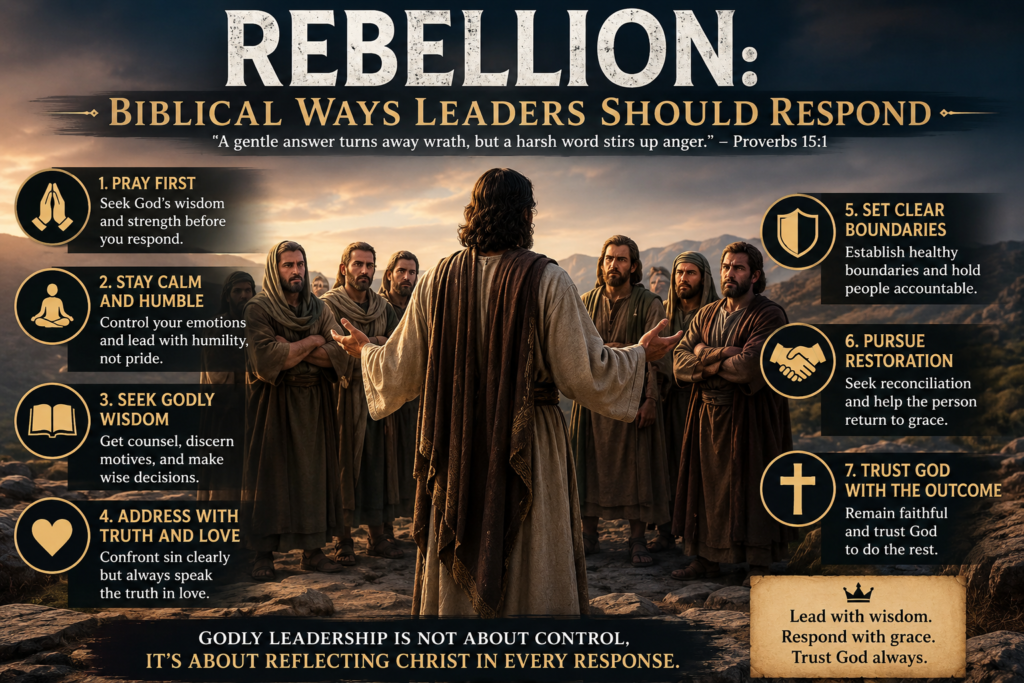
How Should Leaders Respond to Rebellion Biblically
Respond with Prayer First
Prayer should always be the first response, not the last resort.
When facing rebellion, emotions can quickly cloud judgment. Prayer allows leaders to seek wisdom, calm their hearts, and invite God into the situation.
James 1:5 says:
“If any of you lacks wisdom, you should ask God, who gives generously to all without finding fault.”
Prayer helps leaders avoid reacting impulsively. It also reminds them that God is ultimately in control.
Practical ways to pray during conflict include:
- Asking for wisdom
- Praying for the rebellious individual
- Seeking discernment
- Confessing personal pride or anger
- Asking for peace and clarity
Stay Calm and Humble
One of the greatest leadership strengths is emotional control.
Rebellion often provokes anger, defensiveness, or fear. However, Proverbs 15:1 teaches:
“A gentle answer turns away wrath, but a harsh word stirs up anger.”
Biblical leaders resist the temptation to escalate conflict. Instead, they respond calmly and humbly.
Humility does not mean weakness. It means remaining secure enough in God to avoid prideful reactions.
Leaders should ask themselves:
- Am I reacting emotionally?
- Have I listened carefully?
- Is my pride influencing my response?
- Am I seeking God’s glory or personal victory?
Seek Godly Wisdom
Wise leaders rarely make major decisions during emotional moments.
The Bible repeatedly emphasizes the value of wise counsel:
“Plans fail for lack of counsel, but with many advisers they succeed.” — Proverbs 15:22
Leaders should seek guidance from mature believers, mentors, pastors, or trusted advisors before responding to rebellion.
Godly wisdom helps leaders:
- Discern motives
- Avoid overreacting
- Recognize legitimate concerns
- Create fair solutions
For additional biblical leadership resources, many Christians study materials from organizations like Bible Gateway.
Address Sin with Truth and Love
Biblical leadership does not ignore rebellion. Love sometimes requires confrontation.
Ephesians 4:15 says believers should speak “the truth in love.”
Healthy confrontation includes:
- Clear communication
- Respectful tone
- Specific concerns
- Opportunity for repentance
- Desire for restoration
Leaders should avoid:
- Public humiliation
- Gossip
- Passive-aggressive behavior
- Harsh condemnation
Jesus Himself confronted sin directly while still showing compassion.
Set Clear Boundaries
Mercy should never eliminate accountability.
Some rebellious situations require consequences to protect others and preserve order. Moses, Nehemiah, Paul, and even Jesus established boundaries when necessary.
Healthy boundaries may include:
- Corrective discipline
- Leadership accountability
- Temporary removal from responsibilities
- Mediation processes
- Clear expectations moving forward
Boundaries create safety and clarity for everyone involved.
Pursue Restoration When Possible
God’s heart is always toward redemption.
Galatians 6:1 instructs spiritual leaders to restore people gently when they fall into sin.
Restoration may involve:
- Forgiveness
- Counseling
- Rebuilding trust
- Prayer support
- Ongoing discipleship
Not every rebellious person will repent immediately, but leaders should remain open to reconciliation whenever possible.
Biblical Principles Every Leader Should Remember
Leadership Requires Patience
Great leaders understand that transformation takes time.
Even Jesus patiently dealt with the failures, misunderstandings, and weaknesses of His disciples. Peter denied Christ, yet Jesus restored him lovingly.
Patience allows leaders to respond wisely rather than emotionally.
Discipline Must Be Balanced with Mercy
Biblical leadership avoids two dangerous extremes:
- Harsh authoritarianism
- Passive tolerance of sin
Godly leaders combine truth with grace. They uphold righteousness while remaining compassionate.
Micah 6:8 summarizes this balance beautifully:
“Act justly and to love mercy and to walk humbly with your God.”
God Honors Faithful Leaders
Leadership can feel lonely during rebellion. Yet Scripture repeatedly reminds leaders that God sees faithfulness.
Galatians 6:9 encourages believers:
“Let us not become weary in doing good.”
Leaders who remain obedient, prayerful, and humble can trust God with the outcome.
Practical Steps for Modern Christian Leaders
Leading in Churches
Church leaders often face criticism, division, and resistance. Biblical responses include:
- Prioritizing prayer meetings
- Encouraging honest communication
- Maintaining transparency
- Following biblical accountability structures
- Protecting unity without compromising truth
Leading in Families
Parents also encounter rebellion from children or family members.
Biblical family leadership requires:
- Consistent discipline
- Loving communication
- Clear expectations
- Grace and patience
- Modeling godly behavior
Children learn more from a parent’s example than from lectures alone.
Leading in the Workplace
Christian workplace leaders can apply biblical principles by:
- Treating employees fairly
- Listening respectfully
- Addressing problems directly
- Avoiding revenge or favoritism
- Maintaining integrity under pressure
Faith-centered leadership creates healthier workplace cultures.
Frequently Asked Questions
What does the Bible say about rebellion against leadership?
The Bible teaches that rebellion against rightful authority is serious because God establishes order and leadership structures. However, leaders must also lead justly and humbly.
How did Moses respond to rebellion?
Moses responded with prayer, humility, and dependence on God rather than personal revenge or emotional outbursts.
Should Christian leaders forgive rebellious people?
Yes, forgiveness is biblical. However, forgiveness does not always remove consequences or eliminate accountability.
Can rebellion reveal problems in leadership?
Sometimes it can. Wise leaders evaluate criticism honestly and remain teachable rather than defensive.
What is the difference between disagreement and rebellion?
Disagreement can be respectful and constructive. Rebellion involves defiance, pride, and resistance to rightful authority.
Why is prayer important during leadership conflict?
Prayer provides wisdom, emotional stability, discernment, and spiritual guidance during difficult situations.
Conclusion
Understanding how should leaders respond to rebellion biblically is essential for every Christian leader. Rebellion can create pain, division, and uncertainty, but it also provides opportunities for spiritual growth and godly leadership.
The Bible teaches leaders to respond with:
- Prayer
- Humility
- Wisdom
- Truth
- Boundaries
- Compassion
- Restoration
From Moses to David to Jesus Himself, Scripture consistently reveals that godly leadership is rooted in trust in God rather than control over people.
Leaders who remain faithful during conflict not only protect their integrity but also reflect the heart of Christ to those around them.