

Understanding Leadership in a Modern Context
Leadership today comes in many forms—corporate leadership, transformational leadership, transactional leadership, and more. Most of these models focus on achieving goals, improving performance, and maximizing results. While these are important, they often center heavily on outcomes rather than people.
This is where Christian leadership stands apart. It introduces a deeper, purpose-driven approach that goes beyond results and focuses on the heart, character, and spiritual well-being of individuals.
The Rise of Faith-Based Leadership Models
In recent years, there has been a growing interest in leadership styles that prioritize ethics, empathy, and purpose. Christian leadership fits perfectly into this shift, offering a model grounded in timeless biblical truths.
It appeals not only to faith communities but also to organizations seeking more compassionate and values-driven leadership.
Core Definition of Christian Leadership
Biblical Foundations
Christian leadership is rooted in biblical teachings that emphasize love, service, humility, and obedience to God. It is not just a method but a calling—one that requires spiritual maturity and a commitment to living out one’s faith daily.
Leaders are guided by principles such as honesty, compassion, forgiveness, and stewardship.
Christ as the Ultimate Leader
At the center of Christian leadership is the example of Jesus Christ. His life demonstrated leadership through service, sacrifice, and unconditional love.
He did not lead with force or authority alone but through influence, compassion, and truth. This model continues to inspire Christian leaders today.
Key Differences Between Christian Leadership and Other Styles
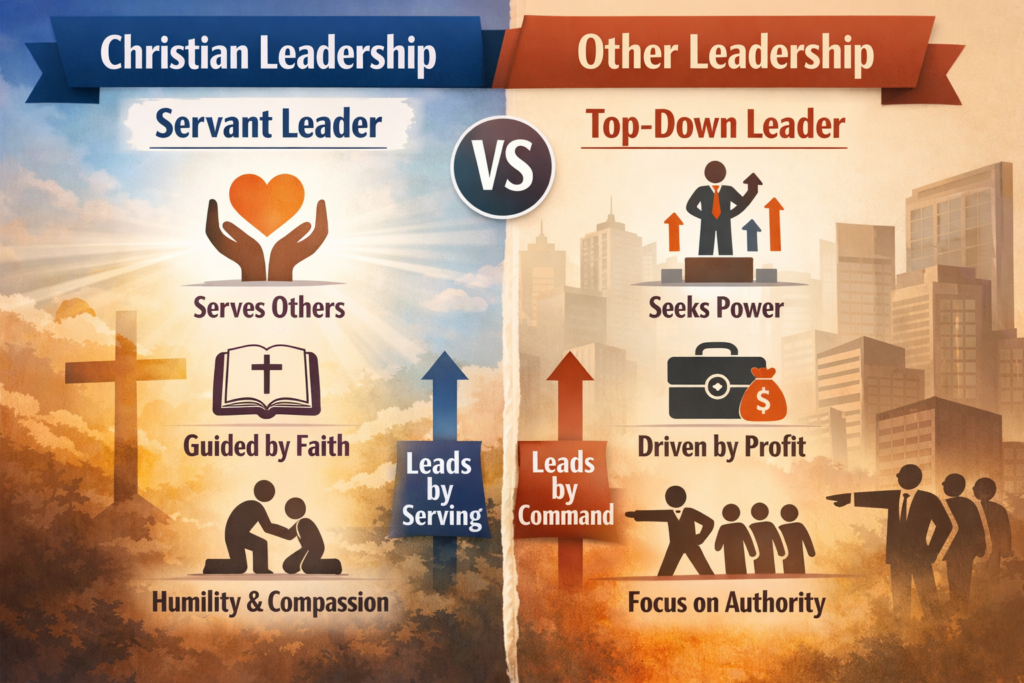
Authority vs. Service
Many leadership styles emphasize authority, hierarchy, and control. Leaders are often seen as decision-makers who direct others from the top down.
In contrast, Christian leadership flips this model. It emphasizes service over authority. Leaders exist to support, guide, and uplift their teams rather than dominate them.
Purpose vs. Profit
Traditional leadership often prioritizes profit, efficiency, and measurable success. While these are important, they are not the ultimate goal in Christian leadership.
Christian leaders focus on purpose—serving others, fulfilling God’s calling, and making a positive impact that goes beyond financial gain.
Servant Leadership as the Cornerstone
Serving Before Leading
One of the most defining features of Christian leadership is servant leadership. This means putting the needs of others first and leading by example.
A servant leader asks, “How can I help my team succeed?” rather than “How can I achieve my goals?”
Impact on Team Culture
When leaders serve their teams, it creates a culture of trust, respect, and collaboration. Team members feel valued and are more motivated to contribute.
This kind of environment leads to stronger relationships and better overall performance.
Values and Ethics in Christian Leadership
Integrity and Accountability
Christian leadership places a strong emphasis on integrity. Leaders are expected to act honestly and consistently, even when no one is watching.
Accountability is also key. Leaders are accountable not only to their teams but also to God.
Moral Decision-Making
Decisions in Christian leadership are guided by moral and ethical principles. Leaders consider what is right, not just what is beneficial.
This ensures fairness, justice, and respect in all actions.
The Role of Faith in Leadership Decisions
Prayer and Discernment
Prayer plays a central role in Christian leadership. Leaders seek God’s guidance before making decisions, especially in challenging situations.
This practice brings clarity, peace, and wisdom.
Trusting Divine Guidance
Unlike other leadership styles that rely solely on logic and experience, Christian leadership includes faith in divine direction.
Leaders trust that God will guide them, even when the path is uncertain.
Focus on People Over Performance
Building Relationships
Christian leadership values relationships over results. Leaders invest time in understanding their team members, supporting them, and building trust.
Strong relationships lead to stronger teams.
Developing Individuals
Instead of focusing only on productivity, Christian leaders prioritize personal growth. They encourage learning, mentorship, and spiritual development.
This creates well-rounded individuals who contribute meaningfully.
Humility vs. Ego in Leadership
The Danger of Pride
Pride can be a major obstacle in leadership. It can lead to poor decisions, broken relationships, and a toxic work environment.
Christian leadership actively resists pride by promoting humility.
Practicing Humility Daily
Humility involves recognizing one’s limitations, valuing others, and being open to feedback. It helps leaders remain grounded and approachable.
Long-Term Vision vs. Short-Term Gains
Eternal Perspective
Christian leadership focuses on long-term impact rather than immediate success. Leaders consider how their actions affect people’s lives and spiritual journeys.
Sustainable Leadership Impact
This perspective leads to sustainable growth and lasting change. It ensures that leadership decisions benefit not just the present but also the future.
Community and Unity in Christian Leadership
Encouraging Collaboration
Christian leadership promotes teamwork and unity. Leaders encourage collaboration and value each member’s contribution.
Resolving Conflict Biblically
Conflicts are handled with grace, forgiveness, and open communication. The goal is always restoration and unity.
Challenges of Christian Leadership in Today’s World
Balancing Faith and Workplace Expectations
One of the biggest challenges is integrating faith into professional environments without causing conflict or misunderstanding.
Leaders must find ways to live out their values while respecting diverse perspectives.
Misconceptions About Christian Leaders
Some people may view Christian leadership as weak or overly passive. However, it is actually a strong and courageous approach that requires discipline and conviction.
Real-Life Applications of Christian Leadership
In Churches and Ministries
Christian leadership is most visible in churches, where leaders guide communities in faith, service, and spiritual growth.
In Business and Organizations
Many businesses are adopting Christian leadership principles to create ethical, people-focused workplaces.
These organizations often see improved morale, loyalty, and long-term success.
FAQs
1. What makes Christian leadership unique?
Christian leadership is unique because it focuses on serving others, following biblical principles, and prioritizing purpose over profit.
2. Is Christian leadership effective in business?
Yes, it promotes trust, ethical behavior, and strong relationships, which are essential for long-term success.
3. How does servant leadership differ from traditional leadership?
Servant leadership prioritizes the needs of others, while traditional leadership often focuses on authority and control.
4. Can non-Christians benefit from Christian leadership principles?
Absolutely. Values like integrity, humility, and compassion are universally beneficial.
5. Why is humility important in Christian leadership?
Humility helps leaders stay grounded, build trust, and maintain healthy relationships.
6. How can I start practicing Christian leadership?
Begin by focusing on serving others, acting with integrity, and seeking guidance through prayer and reflection.
Conclusion
Christian leadership stands out because it goes beyond strategies and techniques—it transforms hearts, builds meaningful relationships, and creates lasting impact. By focusing on service, humility, faith, and purpose, it offers a powerful alternative to traditional leadership styles.
In a world often driven by results and recognition, Christian leadership reminds us that true success lies in serving others and staying faithful to a higher calling.



Pingback: Christian Leadership: Common Signs of Internal Struggles - Fillenium