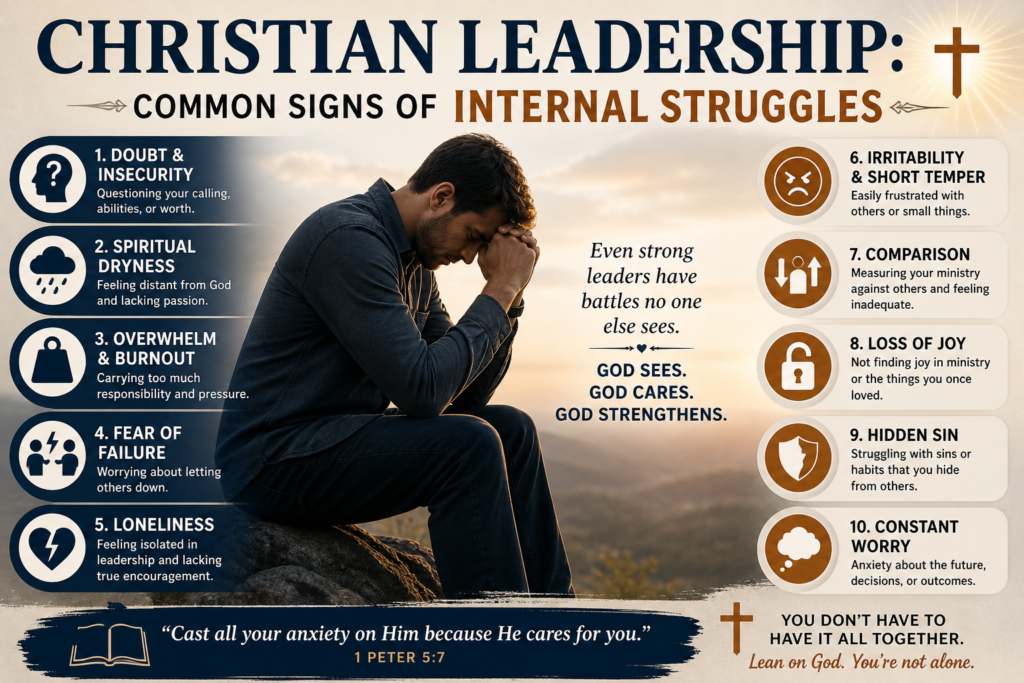

Christian leadership can look strong and confident from the outside, yet many leaders quietly carry heavy burdens within. Pastors, ministry directors, elders, worship leaders, and other servants often guide others while hiding their own pain. If left unaddressed, these silent battles can affect spiritual health, relationships, decision-making, and the overall health of a church community.
So, what are common signs of internal struggles in Christian leadership? The answer includes emotional exhaustion, isolation, loss of joy, spiritual dryness, people-pleasing, irritability, and more. Recognizing these warning signs early can lead to healing, renewal, and stronger leadership.
In this article, we’ll explore common indicators of inner conflict in Christian leaders, why they happen, and practical biblical steps toward restoration.
Why Christian Leaders Often Hide Internal Struggles
Leadership carries responsibility. Christian leadership is expected to counsel others, make wise decisions, preach truth, and model faithfulness. Because of these expectations, many feel pressure to appear steady at all times.
Some leaders may believe:
- “I should be stronger than this.”
- “If I admit weakness, people may lose confidence.”
- “Others need me more than I need help.”
- “I don’t have time to deal with my own pain.”
- Yet Scripture repeatedly reminds us that even faithful leaders struggled. Moses felt overwhelmed. Elijah battled despair. David expressed grief. Peter failed publicly. Paul admitted weakness. God did not reject them—He met them there and that is christian leadership
1. Emotional Exhaustion and Constant Fatigue
One of the clearest answers to what are common signs of internal struggles in Christian leadership is emotional exhaustion.
This goes beyond needing rest after a busy week. It feels like:
- Persistent tiredness
- Lack of motivation
- Difficulty concentrating
- Feeling drained after simple tasks
- Dreading ministry responsibilities
Leaders often pour into others without replenishing their own souls. Over time, emotional burnout can grow quietly.
Biblical Insight
Even Jesus invited His disciples to rest after ministry work (Mark 6:31). Rest is not weakness—it is wisdom.
2. Loss of Joy in Ministry
A leader may continue preaching, serving, and organizing, but inwardly feel numb. Ministry becomes mechanical instead of meaningful.
Signs include:
- Going through motions
- No excitement for worship or teaching
- Feeling detached during church gatherings
- Viewing ministry only as obligation
When joy fades, it often points to deeper fatigue, grief, disappointment, or unresolved pain.
Helpful Step
Return to your first calling. Reflect on why you began serving in the first place.
3. Isolation from Trusted Relationships
Another key answer to what are common signs of internal struggles in Christian leadership is increasing isolation.
A struggling leader may withdraw because they feel ashamed, tired, misunderstood, or afraid to be vulnerable.
They may:
- Avoid honest conversations
- Keep everyone at surface level
- Decline fellowship opportunities
- Carry burdens alone
Isolation can intensify struggles. God designed leadership to happen in community, not loneliness.
Practical Solution
Build relationships with mature believers who are safe, honest, and prayerful.
4. Irritability and Short Temper
When inner pressure rises, it often leaks outward. A leader who is hurting internally may become unusually impatient.
Examples include:
- Overreacting to small issues
- Frustration with staff or volunteers
- Harsh tone at home
- Feeling angry more often
Sometimes anger is not the root issue—it is the symptom. Underneath may be grief, fear, stress, or exhaustion.
Self-Reflection Question
“What pain or pressure is feeding this reaction?”
5. Spiritual Dryness
Christian leaders can publicly minister while privately feeling spiritually empty. This can be one of the most painful hidden struggles.
Signs include:
- Prayer feels forced
- Scripture reading feels lifeless
- Worship feels distant
- God seems silent
- Devotion exists only for sermon preparation
This does not always mean sin. Sometimes it means exhaustion, discouragement, or a season requiring deeper dependence on God.
Encouragement
Dry seasons do not mean abandonment. Many faithful believers walked through them and found renewed intimacy with God.
6. People-Pleasing and Fear of Disapproval
Many leaders genuinely care for people, but internal struggle can turn care into unhealthy approval-seeking.
This may look like:
- Difficulty saying no
- Overcommitting to please everyone
- Fear of criticism
- Changing convictions to avoid conflict
- Anxiety over others’ opinions
When identity shifts from Christ to public approval, emotional instability often follows.
Biblical Reminder
Paul asked, “Am I now trying to win the approval of human beings, or of God?” (Galatians 1:10)
7. Difficulty Making Decisions
Leadership requires judgment, clarity, and courage. But internal conflict can cloud thinking.
Signs include:
- Indecision
- Avoiding necessary conversations
- Constant second-guessing
- Fear of making mistakes
- Delayed action on important issues
Mental overload, anxiety, and emotional fatigue often reduce decision-making ability.
Wise Response
Pause, pray, seek counsel, and simplify unnecessary burdens.
8. Neglecting Family or Personal Health
Sometimes ministry success masks personal decline. A leader may gain influence while losing balance.
Warning signs:
- Ignoring spouse or children
- Poor sleep habits
- No exercise or healthy rhythms
- Skipping vacations or Sabbath rest
- Emotional unavailability at home
Healthy ministry should not require destroying the home life God entrusted to the leader.
Important Truth
Public fruit does not excuse private neglect.
9. Hidden Discouragement or Quiet Despair
Perhaps the most serious answer to what are common signs of internal struggles in Christian leadership is deep discouragement.
A leader may smile publicly while privately thinking:
- “Nothing I do matters.”
- “I’ve failed.”
- “I want to disappear.”
- “I can’t keep going.”
These thoughts should be taken seriously and compassionately. Leaders need support too.
If despair becomes severe, professional counseling and pastoral care may be urgently needed.
What Causes Internal Struggles in Christian Leadership?
Several pressures commonly contribute:
| Cause | Impact |
|---|---|
| Unrealistic expectations | Constant pressure |
| Lack of rest | Burnout |
| Conflict in church | Emotional wounds |
| Personal grief | Hidden sorrow |
| Family stress | Divided focus |
| Isolation | No support system |
| Spiritual warfare | Increased discouragement |
| Perfectionism | Chronic anxiety |
Often, multiple causes overlap at once.
How Christian Leaders Can Begin Healing
Recognizing the signs is the first step. Healing often begins through humility and support.
1. Tell the Truth
Admit the struggle to God and a trusted person. Hidden pain grows in secrecy.
2. Rebuild Spiritual Rhythms
Spend time with God apart from sermon preparation or ministry tasks.
3. Seek Wise Counsel
Pastoral mentors, Christian counselors, or mature peers can help bring clarity.
4. Create Boundaries
Not every request is your assignment. Protect time for family, rest, and prayer.
5. Rest Without Guilt
Rest is stewardship, not laziness.
6. Remember Identity in Christ
You are not loved because of ministry output. You are loved because you belong to Christ.
Frequently Asked Questions
1. Can strong Christian leaders still struggle internally?
Absolutely. Strength does not mean absence of struggle. Many godly leaders faced discouragement, fear, and fatigue.
2. Is spiritual dryness a sign of failure?
Not necessarily. It may reflect exhaustion, grief, or a season of growth through dependence.
3. Should pastors seek counseling?
Yes. Wise counseling can provide healing tools, emotional insight, and support.
4. Why do leaders hide their pain?
Often because of fear, shame, expectations, or concern about losing trust.
5. How can churches help struggling leaders?
Offer prayer, realistic expectations, sabbath support, honest relationships, and encouragement.
6. What if a leader feels like quitting?
They should seek immediate support from trusted leaders, counselors, and mature believers. Quitting may not be the only answer—rest and healing may be needed first.
Conclusion
So, what are common signs of internal struggles in Christian leadership? They often include emotional exhaustion, loss of joy, isolation, irritability, spiritual dryness, people-pleasing, indecision, family neglect, and discouragement. These signs do not mean failure—they mean attention is needed.
Christian leaders are human beings, not machines. They need grace, support, rest, and honest community. When struggles are brought into the light, healing can begin. In fact, some of the strongest leaders are not those who never struggle—but those who humbly seek God and help in the middle of it.
For additional encouragement on leadership health, resources from organizations like Focus on the Family and Christianity Today may be helpful.